Industrial Storage Tanks: Design, Operation & Maintenance
Understand how industrial storage tanks are selected, designed, built, operated, inspected, maintained, and repaired.
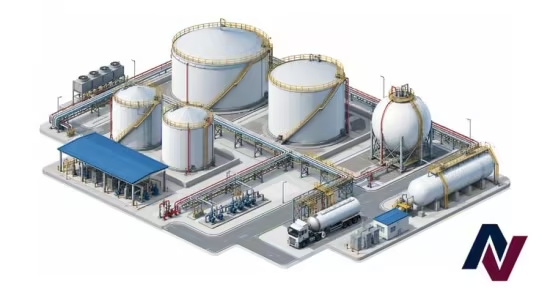
What you'll learn
Explain storage tank functions, classifications, operating limits, lifecycle stages, hazards, and performance requirements.
Interpret product properties, capacity, pressure, temperature, and operating levels as key inputs to storage decisions.
Identify major tank types and evaluate their operating principles, service suitability, limitations, and failure risks.
Interpret major tank codes and standards and determine their applicability to design, operation, inspection, and repair.
Explain the functions, load paths, interfaces, and common vulnerabilities of tank shells, bottoms, roofs, openings, and access systems.
Evaluate design inputs to select suitable tank types, dimensions, materials, foundations, anchorage, venting, and containment.
Assess tank behavior under hydrostatic, pressure, vacuum, wind, seismic, settlement, uplift, and thermal effects.
Explain key fabrication, welding, erection, dimensional control, hydrotest, commissioning, and acceptance practices.
Apply sound operating practices for filling, emptying, gauging, overfill prevention, floating roofs, heating, mixing, and product control.
Assess major operational hazards and controls involving emissions, fire, static electricity, lightning, hazardous areas, cleaning, and entry.
Identify corrosion, cracking, distortion, settlement, leakage, and other deterioration mechanisms affecting tank integrity.
Evaluate coatings, linings, cathodic protection, inspection methods, NDE, settlement monitoring, and leak detection for integrity control.
Determine corrosion rates, remaining life, fitness for service, and inspection priorities using condition, risk, and code-based criteria.
Evaluate repair, alteration, testing, documentation, and return-to-service requirements for continued safe and reliable tank operation.
Requirements
No specific prerequisites are required. A basic understanding of engineering, technical, or industrial concepts is helpful, along with sufficient English proficiency to follow technical terminology and documentation. Prior academic, technical, or industry experience may be beneficial but is not essential. A strong interest in storage tanks and related industrial applications is recommended.
Description
“This course contains the use of artificial intelligence.”
Storage tanks are critical industrial assets wherever liquids and other products must be stored safely, reliably, and efficiently. Their performance depends on the combined influence of service conditions, materials, structural behavior, operating practices, environmental exposure, inspection quality, and long-term asset care. A sound understanding of storage tank engineering helps professionals recognize how these factors affect containment, reliability, safety, environmental protection, and continued service. This makes storage tank knowledge highly relevant to real-world engineering, maintenance, integrity, and operational decision-making.
The course is structured to build knowledge through a clear technical progression. It begins with the fundamental concepts needed to understand storage tank systems and then develops a deeper appreciation of tank configurations, components, engineering requirements, and design considerations. The learning then moves into fabrication, construction, testing, commissioning, and operation before progressing to deterioration, inspection, condition assessment, and integrity evaluation. The final stage brings these areas together through repair, alteration, verification, and return-to-service considerations, supporting a logical progression from foundational understanding to practical assessment and informed professional judgment.
In industrial practice, tank performance can be affected by corrosion, settlement, loading, operating changes, leakage, structural deterioration, and other forms of degradation. Understanding how these conditions are identified, evaluated, monitored, and managed is essential for supporting effective tank inspection, maintenance planning, asset integrity, and fitness-for-service decisions. The course also reflects the importance of recognized codes, standards, inspection frameworks, and engineering documentation in establishing consistent and defensible technical decisions.
The broader practical value of this knowledge is the ability to connect design intent with actual operating condition and lifecycle performance. Developing a strong understanding of storage tank design, operation, inspection, integrity management, repair, and lifecycle decision-making helps support clearer technical communication and more consistent engineering judgment across industrial environments. It also provides a practical basis for understanding how storage assets are assessed, maintained, modified, verified, and managed throughout their service life.
Each lecture includes dedicated study material and an infographic summary. Learners should review the study material after watching the lecture to strengthen their understanding, and use the infographic summary for quick revision and easy recall of key concepts whenever needed.
Who this course is for
Students, graduates, and early-career professionals in engineering or industrial fields who want to build a structured understanding of storage tank systems and practices.
Engineers and technical professionals involved in tank design, materials, foundations, venting, construction, commissioning, or related technical activities.
Professionals in operations, inspection, maintenance, reliability, integrity, or asset management who work with tank performance, condition, and lifecycle decisions.
Professionals working in industrial facilities where storage tanks and tank farms are important assets and who need relevant technical knowledge for their roles.
Published 9/2026
MP4 | Video: h264, 1920x1080 | Audio: AAC, 44.1 KHz, 2 Ch
Language: English | Duration: 12h 25m | Size: 7.32 GB
Download
🔒 Go Premium to Unlock
Understand how industrial storage tanks are selected, designed, built, operated, inspected, maintained, and repaired.
What you'll learn
Explain storage tank functions, classifications, operating limits, lifecycle stages, hazards, and performance requirements.
Interpret product properties, capacity, pressure, temperature, and operating levels as key inputs to storage decisions.
Identify major tank types and evaluate their operating principles, service suitability, limitations, and failure risks.
Interpret major tank codes and standards and determine their applicability to design, operation, inspection, and repair.
Explain the functions, load paths, interfaces, and common vulnerabilities of tank shells, bottoms, roofs, openings, and access systems.
Evaluate design inputs to select suitable tank types, dimensions, materials, foundations, anchorage, venting, and containment.
Assess tank behavior under hydrostatic, pressure, vacuum, wind, seismic, settlement, uplift, and thermal effects.
Explain key fabrication, welding, erection, dimensional control, hydrotest, commissioning, and acceptance practices.
Apply sound operating practices for filling, emptying, gauging, overfill prevention, floating roofs, heating, mixing, and product control.
Assess major operational hazards and controls involving emissions, fire, static electricity, lightning, hazardous areas, cleaning, and entry.
Identify corrosion, cracking, distortion, settlement, leakage, and other deterioration mechanisms affecting tank integrity.
Evaluate coatings, linings, cathodic protection, inspection methods, NDE, settlement monitoring, and leak detection for integrity control.
Determine corrosion rates, remaining life, fitness for service, and inspection priorities using condition, risk, and code-based criteria.
Evaluate repair, alteration, testing, documentation, and return-to-service requirements for continued safe and reliable tank operation.
Requirements
No specific prerequisites are required. A basic understanding of engineering, technical, or industrial concepts is helpful, along with sufficient English proficiency to follow technical terminology and documentation. Prior academic, technical, or industry experience may be beneficial but is not essential. A strong interest in storage tanks and related industrial applications is recommended.
Description
“This course contains the use of artificial intelligence.”
Storage tanks are critical industrial assets wherever liquids and other products must be stored safely, reliably, and efficiently. Their performance depends on the combined influence of service conditions, materials, structural behavior, operating practices, environmental exposure, inspection quality, and long-term asset care. A sound understanding of storage tank engineering helps professionals recognize how these factors affect containment, reliability, safety, environmental protection, and continued service. This makes storage tank knowledge highly relevant to real-world engineering, maintenance, integrity, and operational decision-making.
The course is structured to build knowledge through a clear technical progression. It begins with the fundamental concepts needed to understand storage tank systems and then develops a deeper appreciation of tank configurations, components, engineering requirements, and design considerations. The learning then moves into fabrication, construction, testing, commissioning, and operation before progressing to deterioration, inspection, condition assessment, and integrity evaluation. The final stage brings these areas together through repair, alteration, verification, and return-to-service considerations, supporting a logical progression from foundational understanding to practical assessment and informed professional judgment.
In industrial practice, tank performance can be affected by corrosion, settlement, loading, operating changes, leakage, structural deterioration, and other forms of degradation. Understanding how these conditions are identified, evaluated, monitored, and managed is essential for supporting effective tank inspection, maintenance planning, asset integrity, and fitness-for-service decisions. The course also reflects the importance of recognized codes, standards, inspection frameworks, and engineering documentation in establishing consistent and defensible technical decisions.
The broader practical value of this knowledge is the ability to connect design intent with actual operating condition and lifecycle performance. Developing a strong understanding of storage tank design, operation, inspection, integrity management, repair, and lifecycle decision-making helps support clearer technical communication and more consistent engineering judgment across industrial environments. It also provides a practical basis for understanding how storage assets are assessed, maintained, modified, verified, and managed throughout their service life.
Each lecture includes dedicated study material and an infographic summary. Learners should review the study material after watching the lecture to strengthen their understanding, and use the infographic summary for quick revision and easy recall of key concepts whenever needed.
Who this course is for
Students, graduates, and early-career professionals in engineering or industrial fields who want to build a structured understanding of storage tank systems and practices.
Engineers and technical professionals involved in tank design, materials, foundations, venting, construction, commissioning, or related technical activities.
Professionals in operations, inspection, maintenance, reliability, integrity, or asset management who work with tank performance, condition, and lifecycle decisions.
Professionals working in industrial facilities where storage tanks and tank farms are important assets and who need relevant technical knowledge for their roles.
Published 9/2026
MP4 | Video: h264, 1920x1080 | Audio: AAC, 44.1 KHz, 2 Ch
Language: English | Duration: 12h 25m | Size: 7.32 GB
Download
🔒 Go Premium to Unlock