Best Practices in Steel - Residential
Introduction
The design of housing and residential buildings is influenced by many
factors, including new requirements for sustainability, and thermal and
acoustic performance. The environmental need to conserve land use,
whilst improving the social characteristics of the built environment,
also have a direct effect on the choice of constructional system.
The pressure for more efficient and sustainable construction processes
to meet these challenges has led to a demand for higher degrees of
prefabrication and improved quality in the performance of the chosen
construction technology.
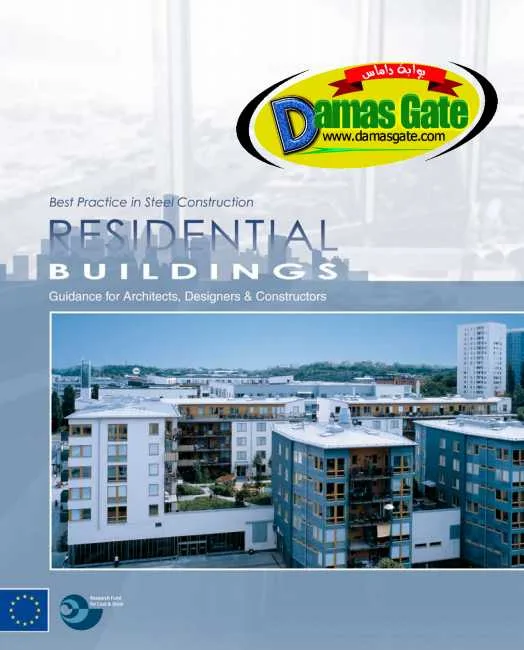
Steel constructional technologies have achieved a high market share in other building sectors and the same technologies can be used in housing and residential buildings, where the main benefits include: speed of construction, higher levels of quality, reliability and longevity, and the ability to provide more adaptable use of space.
This publication presents best practice for the range of steel technologies used in housing and in residential buildings of all types, including mixed use commercial and residential buildings.
The steel technologies may be used separately or in combination to provide complete building systems. These ‘hybrid’ forms of construction technologies lead to a wide variety of design solutions.
The guidance covers structural and building physics aspects of these steel technologies. Differences in national practices are also identified and the constructional technologies are illustrated by a series of case examples of recent housing and residential projects in four countries.
Download
🔒 Go Premium to Unlock